What I Learned About Healing at the Cellular Level And How It Changed My Recovery
There’s a part of healing no one prepares you for, the hidden layer beneath the physical rehab, beneath the mental battle, beneath the emotional waves.
It’s the part happening deep inside your cells.
Most of my life, I never thought about cellular health.
Honestly, why would I? I was active. Teaching. Playing music. Running businesses. Living fast. Recovering fast. My body always “bounced back.”
But after my stroke, and later, my heart attack, something changed.
The bounce wasn’t bouncing anymore.
It didn’t matter how much I wanted my body to respond…
It was operating on a whole different level.
A slower level.
A depleted level.
And that’s when I realized something essential:
Healing isn’t just physical. It’s cellular.
If the cells aren’t repairing, nothing else truly moves forward.
𝗪𝗵𝗲𝗻 𝗜 𝗥𝗲𝗮𝗹𝗶𝘇𝗲𝗱 𝗦𝘂𝗿𝗳𝗮𝗰𝗲-𝗟𝗲𝘃𝗲𝗹 𝗛𝗲𝗮𝗹𝗶𝗻𝗴 𝗪𝗮𝘀𝗻’𝘁 𝗘𝗻𝗼𝘂𝗴𝗵
For months after the stroke, I felt like I was doing everything right:
Eating better
Resting more
Moving more intentionally
Managing stress
Doing my rehab
Staying mentally active
And yet…
my energy wasn’t improving.
My inflammation would flare unexpectedly.
My balance and mobility gains were inconsistent.
My mental clarity was hit and miss.
It was frustrating.
Honestly, it was discouraging.
I kept thinking,
“I’m doing all the right things… so why do I still feel stuck?”
That’s what led me down the path I had never explored before, something I now believe should be talked about more openly:
cellular-level healing.
Because after a major health event, your body isn’t just “injured.”
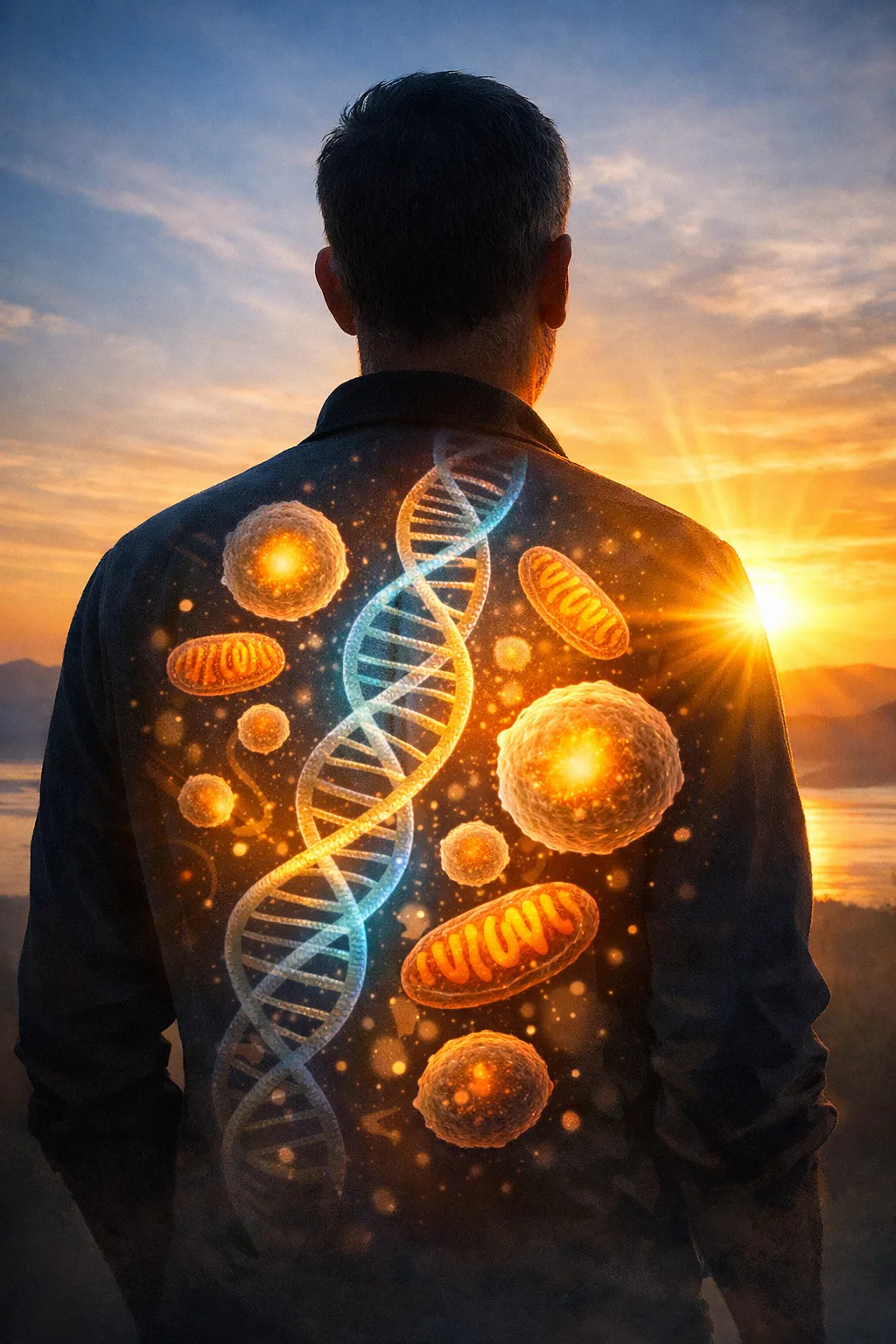
It’s overwhelmed at the most basic level, the level of mitochondria, signaling pathways, energy production, and repair mechanisms.
If the cells aren’t getting what they need, recovery feels like pushing a boulder uphill.
And that’s exactly where I was.
𝗔𝗴𝗶𝗻𝗴, 𝗦𝘁𝗿𝗼𝗸𝗲 𝗥𝗲𝗰𝗼𝘃𝗲𝗿𝘆, 𝗮𝗻𝗱 𝗖𝗲𝗹𝗹𝘂𝗹𝗮𝗿 𝗗𝗲𝗰𝗹𝗶𝗻𝗲
Nobody likes to talk about it,
but aging changes everything, especially at the cellular level.
At 68, my body doesn’t repair the way it did at 28 or 48.
That’s reality.
A stroke drains the body.
A heart attack stresses every system.
Inflammation rises.
Energy production becomes compromised.
Neural pathways need rebuilding.
And yet most recovery systems only address the surface:
Can you move your arm?
Can you walk further today?
How’s your balance?
How’s your speech?
These things matter, but they don’t tell the full story.
The deeper story is happening in places we can’t see:
inside the cells that are trying to repair, reconnect, rebuild, and restore function.
That’s where I needed support.
That’s where most survivors need support.
And that’s the part of recovery almost no one talks about.
𝗧𝗵𝗲 𝗠𝗶𝘀𝘀𝗶𝗻𝗴 𝗟𝗶𝗻𝗸 𝗶𝗻 𝗠𝘆 𝗥𝗲𝗰𝗼𝘃𝗲𝗿𝘆, 𝗦𝘂𝗽𝗽𝗼𝗿𝘁𝗶𝗻𝗴 𝗠𝘆 𝗖𝗲𝗹𝗹𝘀
After months of feeling like progress was slow and unpredictable, I started researching and experimenting with different approaches, always with the mindset:
“How do I support my body so it can do the job it’s trying to do?”
And that’s when I found the protocol I use now.
I won’t make medical claims or promises, that’s not my style.
I’m not here to say it cures anything or replaces rehab.
But I will tell you the truth:
My recovery finally started moving again when I began supporting myself at the cellular level.
What changed for me personally:
My energy became steadier
My inflammation episodes dropped dramatically
My mental clarity returned more consistently
My mobility improved faster
My confidence came back
My body felt like it finally had what it needed
I felt less “stuck” and more “capable”
I had tried many natural approaches over the years, and lots of them helped.
But none of them addressed the deeper layer I was missing.
This protocol finally did.
It gave my cells support for energy production…
signaling…
repair…
and inflammation balance…
which, for a stroke survivor, is absolutely essential.
It didn’t do the healing for me,
it helped my body do what it’s designed to do.
And when your biology starts working again,
your hope comes back.
𝗧𝗵𝗲 𝗛𝗮𝗿𝗱 𝗧𝗿𝘂𝘁𝗵 𝗧𝗵𝗮𝘁 𝗠𝗮𝗱𝗲 𝗘𝘃𝗲𝗿𝘆𝘁𝗵𝗶𝗻𝗴 𝗖𝗹𝗶𝗰𝗸
There was one realization that tied everything together for me:
“My recovery wasn’t slow because I wasn’t working hard…
It was slow because my cells needed help.”
That truth set me free from the guilt and frustration I had been carrying.
Because healing isn’t about willpower.
It’s not about trying harder.
It’s not about “pushing through.”
Healing is about supporting the body from the inside out.
And when I accepted that, I stopped beating myself up…
and started rebuilding strategically.
Acceptance isn’t giving up.
It’s the moment you finally start moving forward.
𝗜𝗳 𝗬𝗼𝘂’𝗿𝗲 𝗥𝗲𝗯𝘂𝗶𝗹𝗱𝗶𝗻𝗴, 𝗬𝗼𝘂 𝗗𝗲𝘀𝗲𝗿𝘃𝗲 𝗦𝘂𝗽𝗽𝗼𝗿𝘁 𝗮𝘁 𝗘𝘃𝗲𝗿𝘆 𝗟𝗲𝘃𝗲𝗹
If you’re healing from a stroke, a heart issue, or any major health event
I want to tell you something I wish I’d heard earlier:
You’re not weak, slow, or behind.
Your body is doing the best it can with the resources it has.
And if you feel stuck…
it might not be you.
It might be your cells trying to call for help.
Supporting yourself at the cellular level changed my recovery.
It gave me momentum when I didn’t have any.
It gave me hope when things felt flat.
It gave me confidence when my body finally started responding again.
You deserve that kind of support too.
If you're rebuilding and want to talk about what’s been helping me, physically, mentally, and yes, at the cellular level, I’m here.
No pressure.
Just a conversation between two people trying to heal and live fully again.
Bob